
glossary
E-beam
E-beam lithography writes a pattern with a focused electron beam, shape by shape or pixel by pixel, instead of flashing a whole field through glass.
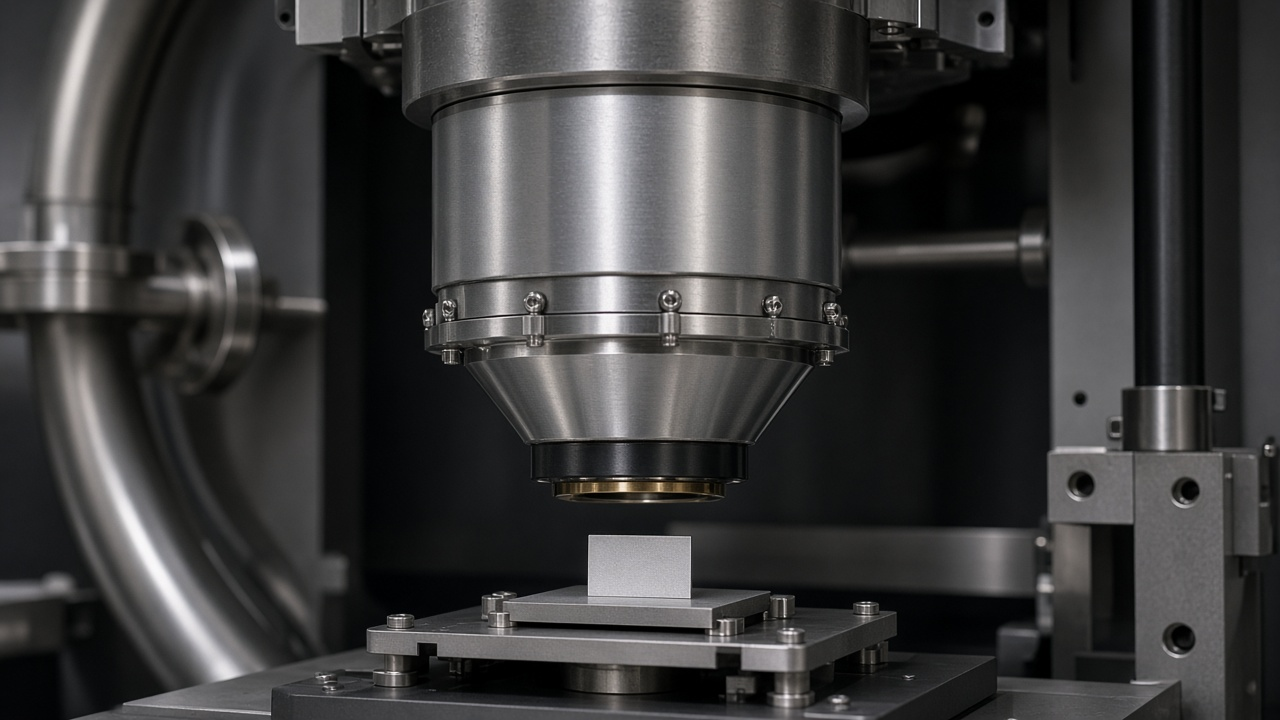
A column over a small coupon. The pattern is written by the beam. There is no glass plate in the path.
The beam is used when a photomask is too slow or too costly for one prototype, and a mask shop uses the same beam to write the plate itself. In the vacuum tool the beam visits each fracture shot and writes GDSII onto photoresist on a wafer or on a mask blank. There is no stepper field grid unless someone adds one for mix-and-match. Dose and proximity-effect correction are part of the job. Dose, current, and the number of passes set both write time and the resulting width. A 1 square millimeter of dense 50 nanometer lines can take a long time. A 100 MHz pattern generator can still take a night on a large field if the fracture is naive.
E-beam suits research, MEMS one-offs, and mask making. It does not suit a million identical chips unless the flow writes a mask and then steps that mask. A stepper prints a whole field from glass. The beam visits shapes one at a time. Mix-and-match writes the critical layers by beam and prints the rest with a stepper. Those layers still need the same care in alignment as any two masks, because the tools do not share a reticle.
A huge flattened fill pattern is a common reason a write never finishes. Hierarchy and sparse shots keep the job shorter. Empty space should stay empty.
Further reading is in e-beam writes one shape at a time, what a photomask is, and steppers and why size matters.