
glossary
Release
Release is a late removal step that dissolves a throwaway film so a part can hang, tilt, or move, instead of staying glued to the disk.
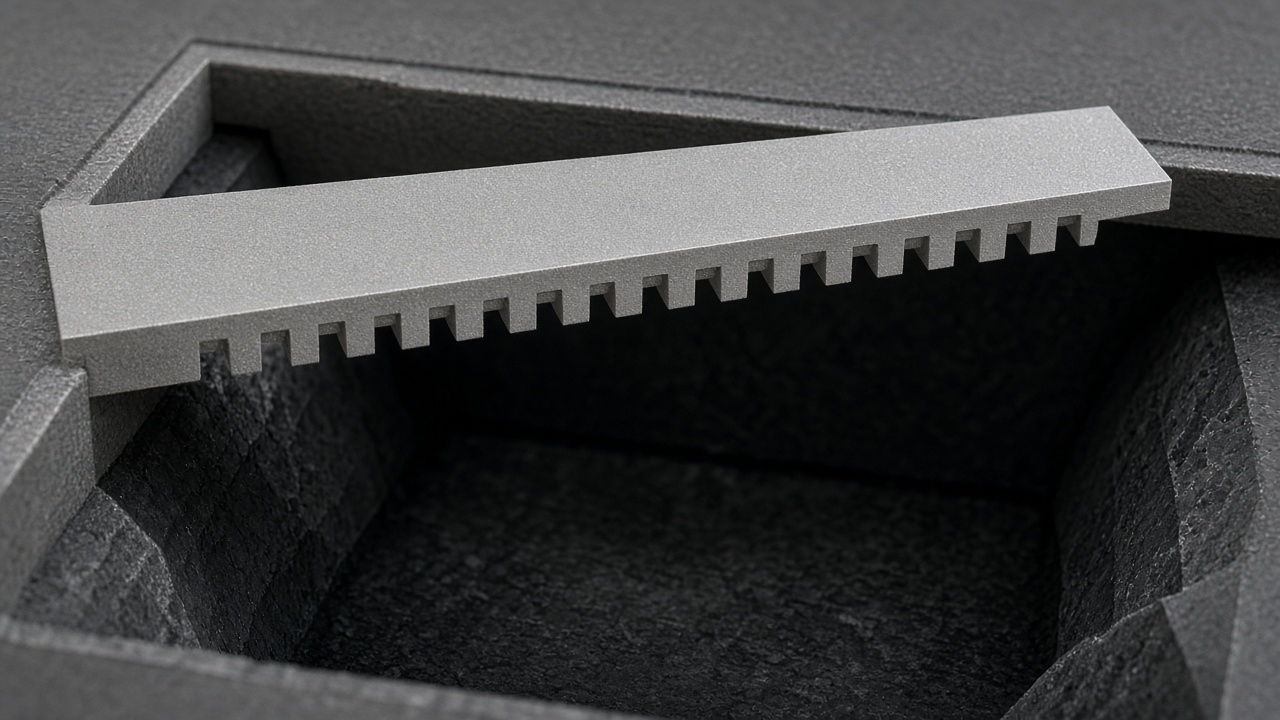
A thin structure hanging free over a pit, no longer glued to the disk.
A MEMS drawing that looks solid is often a sandwich: structural film, sacrificial film, and holes for the chemistry to crawl in. Forget the holes and the part never frees. Make them too sparse and the release takes hours or leaves stiction. A 2 micrometer hole pitch in a membrane is a typical conversation. After a wet or vapor etch, the device rattles gently, and under a microscope the structure stands on posts. The file often names one layer anchor and another release_hole.
Release is an etch with a job: remove the sacrificial deposit and stop on the structure. Photoresist is usually already gone. The 2-D file does not show the air gap; a cross-section does. Release holes are process doors. Put them on the layer the recipe etches, and keep enclosure to the anchors so the part does not float away.
Stiction is the quiet killer after a wet release. The job notes mention dimples and critical-point drying, and a hole pitch of 3 micrometers on a 200 micrometer membrane. Vapor HF release wants different hole sizes than a wet etch. Draw the holes on the layer the recipe names, and keep a solid enclosure to every anchor so the part does not leave the wafer as glitter.
The recipe, the cross-section, and the drawing are covered in MEMS is layout plus a recipe, looking at a cross section, and what is a layout.