
glossary
Etch
An etch is a process step that removes material where the stencil is open, cutting a film or digging a pit.
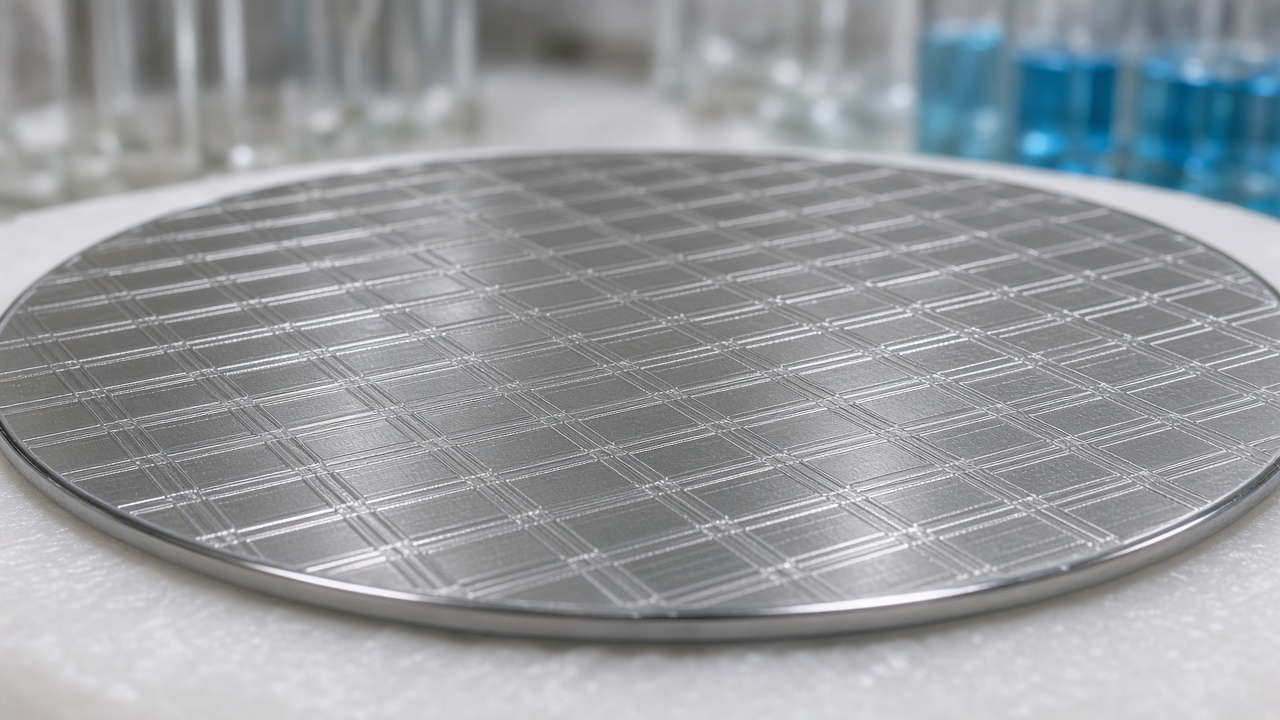
Trenches where material was removed. The stencil is already gone.
A drawing layer often means "cut here" rather than "leave metal here." A via layer is an etch through insulator. A trench in MEMS can be tens of micrometers deep. Wet etch undercuts. Dry etch is more vertical. The drawing does not store the recipe. A cross-section does. A process book states the step in words such as "etch oxide, stop on metal." A 0.2 micrometer hole in the file becomes a 0.2 micrometer-ish hole in the film, plus the bias the foundry already baked into the rules.
Etch follows the photoresist pattern. The opposite family of steps is to deposit a film, putting material down instead of taking it away. A later release etch can free a moving part by removing a sacrificial layer under it. Aspect ratio changes the job. A 0.2 micrometer hole through 1 micrometer of oxide is a different etch from a 20 micrometer-deep MEMS trench. The trench can notch at the bottom and round at the top. Width rules try to keep a design away from those cliffs.
The rule deck's minimum is the size after that bias. Drawing the hole at the size wanted in silicon, then shrinking that drawing to silence a DRC complaint, puts the opening below the printed result. A special etch is a new layer and a new conversation, not a note written on an existing sheet.
See MEMS is layout plus a recipe, what a photomask is, and looking at a cross section.