
glossary
Density
Density is how much of a region is covered by a material, stated as a percentage rather than as an average color.
Factories polish and etch more evenly when a layer is neither a desert nor a solid plate, so density is a rule, like width and spacing, with a window size. A metal density window might demand 15 percent to 70 percent in every 100 micrometer tile. Empty corners get fill. Overstuffed corners get a lecture, or a failed wafer. The result shows up as a heat map, or as a report: M2 density 8% in tile (12,4). Dummy squares appear in the empty tile after fill. Density is not how dark the screenshot looks. Zoom level lies. The checker tiles the die and counts area. Fill on the wrong layer, or fill over a keepout, is the wrong fix. Dummy metal that shorts a net is not helpful coverage.
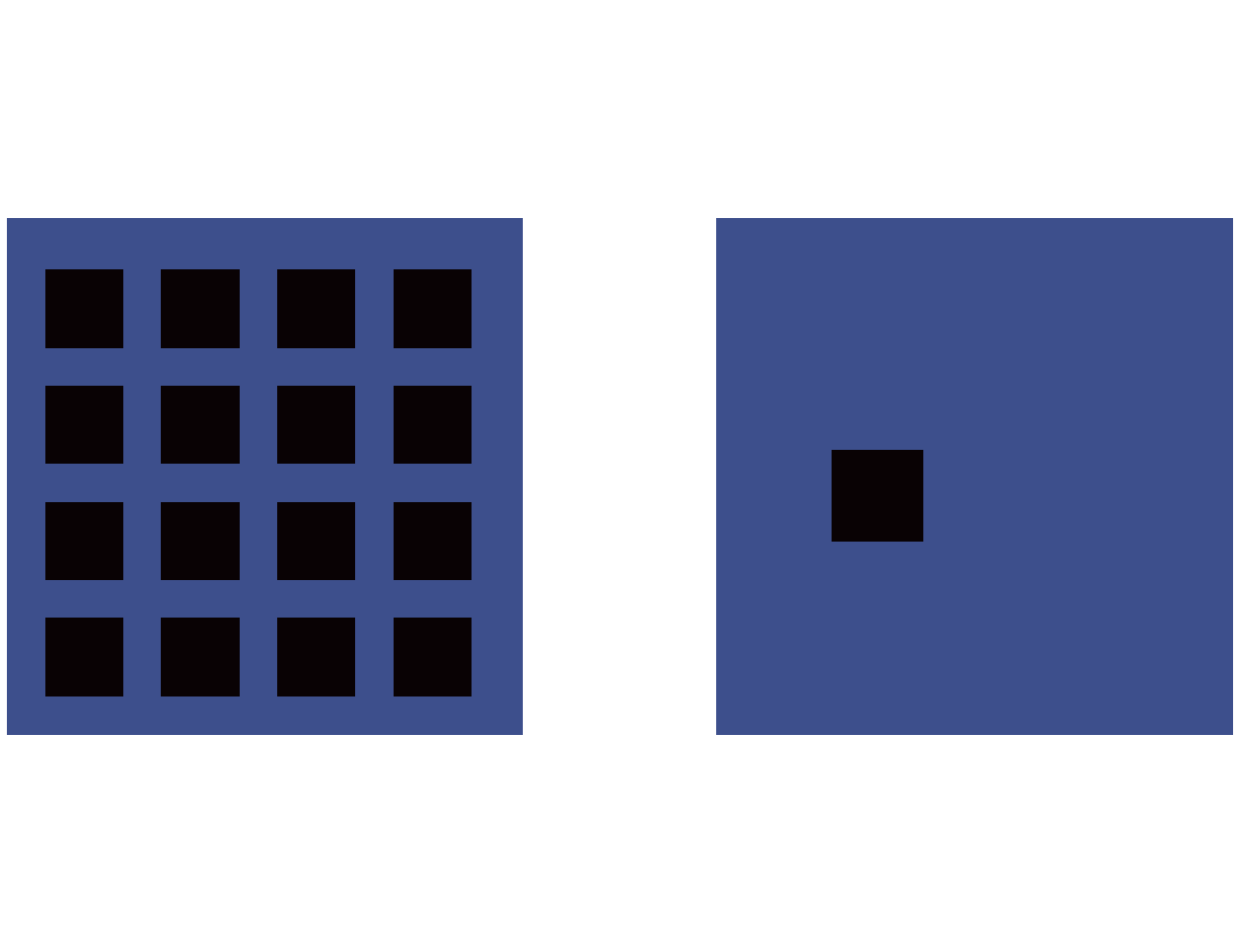
The left window is mostly covered. The right window is almost empty, with one square in it.
Windows overlap. A tile that looks fine can fail when the window slides 50 micrometers. The checker reports the worst window, not the chip average. Local density (a 10 micrometer window) and global density (the whole die) may both exist. Fill for one can break the other if the dummy size is wrong.
Window sizes, why the percentage is a rule, and how dummy shapes are added are covered in density rules and fill; why design rules bind is in design rules and DRC.