
glossary
DEF
DEF, Design Exchange Format, is a text file that describes one assembled drawing: which blocks sit where, how they face, and which roads were drawn between them.
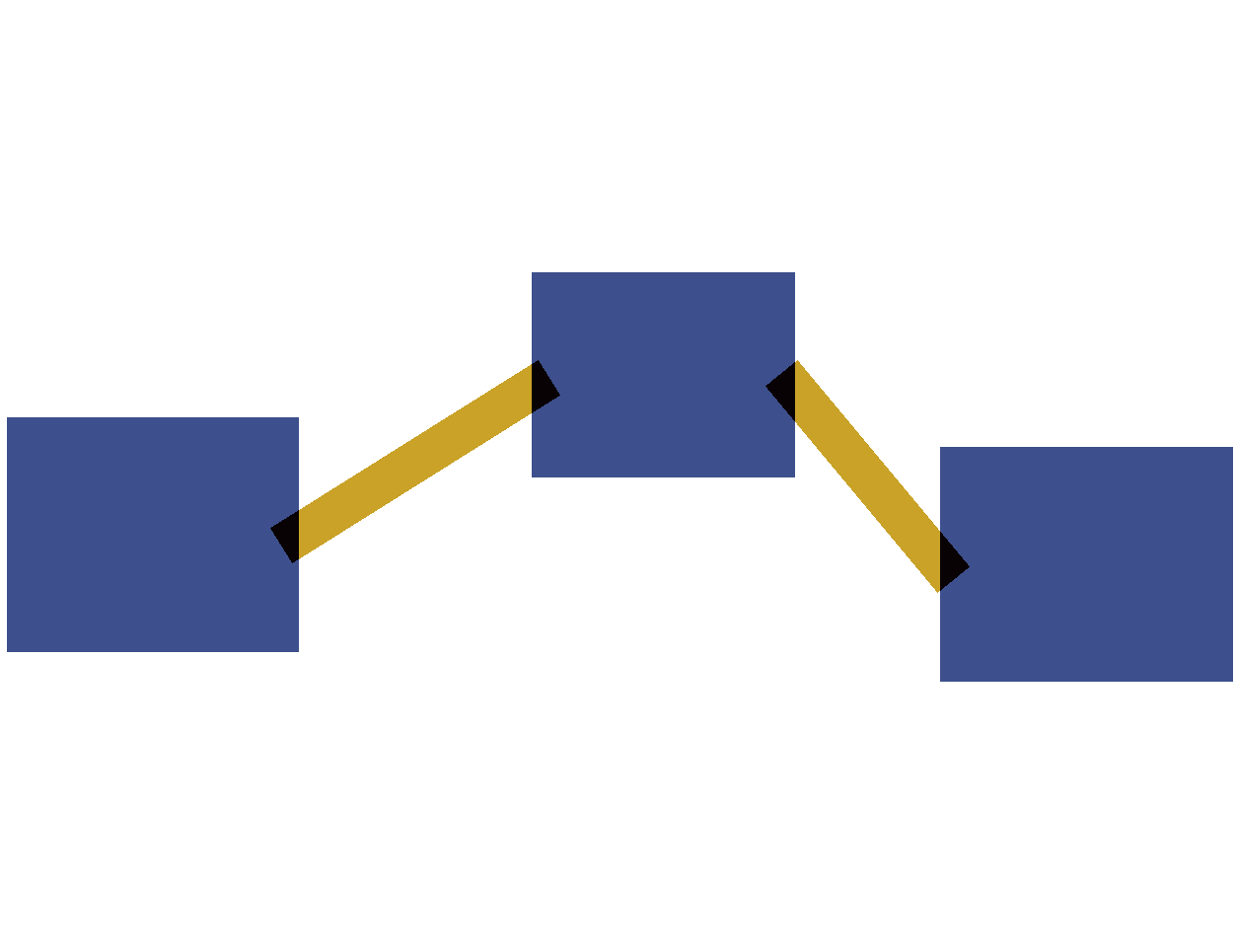
Three blocks, placed, with a road drawn from one to the next.
Place-and-route writes DEF after the floorplan exists. The file names the die size, the rows, the instance placements, the net names, and the routed metal. Send it back into an editor and the floorplan appears without unpacking every transistor. A 500 micrometer square core with 80,000 cells is a normal DEF story. The text looks like chip.def, with COMPONENTS 80000 ; and then lines such as - U1234 INVX1 + PLACED ( 1200 5600 ) N ;. Special nets such as power may appear as wide stripes. DEF leans on LEF for the library. Without LEF, the names have no outlines. The mask view is still GDSII or OASIS. The connection story started as a netlist from a schematic or from synthesis. DEF is not the tapeout file. Foundries want stream data and a layer map. DEF is the conversation with the digital tools, not the letter to the mask shop.
DEF is handy for floorplan reviews. The text shows rows 1.8 micrometers tall, a 20 micrometer channel for a trunk net, and blockage boxes where analog IP sits. If you edit the geometry in GDSII and never write DEF back, the digital tool will resurrect the old placements. Pick one source of truth per milestone.
How the text relates to the schematic, how cells are placed in it, and how the mask file differs are covered in LVS: layout versus schematic, cells and instances, and GDSII in plain language.